Frequently Asked Questions
Everything you need to know about going solar on the South Shore of Massachusetts. No sales spin, just honest answers and real numbers from 15+ years of experience.
About Dave & Solar Dave MA
Who is Dave Simmer and what is Solar Dave MA?
I'm Dave — a NABCEP-trained solar designer based in Scituate. Solar Dave MA is how I work: I'm the independent expert on your side of the table. I assess your home, design the system, get you the right price, and oversee the entire project through licensed Massachusetts installation crews. One point of contact, from first look to switch-on, since 2011.
What towns on the South Shore do you serve?
I primarily serve the South Shore of Massachusetts. My main service areas include Scituate, Hingham, Duxbury, Cohasset, Marshfield, Plymouth, Norwell, Hanover, Pembroke, Weymouth, Braintree, Kingston, Rockland, and Abington. Because I'm local, I know the permitting offices and inspectors in these towns, which helps projects move smoothly. You can see all towns I serve here.
Are you affiliated with any specific solar manufacturer?
No, I am completely independent. I don't have sales quotas to hit for any specific panel or inverter brand. I recommend what makes the most sense for your specific roof and budget. That said, I do have strong preferences for premium, reliable gear like REC solar panels, Enphase IQ8X microinverters, SolarEdge inverters, and Fortress batteries based on their performance in New England.
Do you install the solar panels yourself?
No — and that's by design. I'm the designer and project manager, not the guy swinging the drill. The physical installation is done by a licensed, insured Massachusetts installation crew I've worked with for years, and your installation agreement and workmanship warranty come from that licensed company. What you get from me is the part most solar buyers never get: someone independent who designs the system right, checks the work, and answers the phone in year six. Honestly, you don't want your designer on the roof anyway — you want him watching the whole project.
Who installs solar in Scituate MA?
A mix of national companies, regional installers, and independents serve Scituate. My model is different from all of them: I design and oversee your project personally, and licensed local crews perform the installation. If you're comparing options, see my honest comparison of solar companies serving the South Shore.
Why Choose Solar Dave MA on the South Shore
Who is the best solar installer on the South Shore of Massachusetts?
Depends what you're optimizing for — but here's my honest take: the best setup is having someone independent watching your project who isn't paid to maximize the contract. That's what I do. I've personally sold and overseen 1,800+ installations since 2011, and if a specific installer is genuinely the better fit for your job, I'll tell you.
Do you use high-pressure sales tactics?
Never. I provide proposals, not pitches. I'll evaluate your roof, review your National Grid or Eversource bill, and show you exactly what a system will cost and produce. If solar isn't a good fit for your home—maybe due to heavy shading or a roof nearing the end of its life—I will tell you outright. You can take my numbers and think about it on your own timeline.
Why should I choose a local expert over a big national solar company?
Big national companies often use cookie-cutter designs, subcontract the work to the lowest bidder, and rely on aggressive door-to-door sales reps who don't understand local utility rules. Read my full breakdown of an independent vs. national solar company. As a local expert, I know exactly how National Grid and Eversource handle net metering on the South Shore. I know the local town inspectors in Hingham, Duxbury, and Plymouth. You get a custom design, premium equipment, and my direct phone number.
How many installations have you overseen?
Since 2011, I have personally sold and overseen 1,800+ home installations across Massachusetts. That level of experience means I've seen every type of roof, every electrical panel quirk, and every shading issue imaginable.
Why work with an independent instead of going straight to a solar company?
When you call a solar company, you get their salesperson, their equipment, and their price. When you call me, you get someone whose only job is making sure the right system goes on your home at the right price — I design it, price it competitively, and oversee the licensed crew that installs it. It usually saves people time, money, and a whole lot of hassle. And if solar doesn't make sense for your home, I'm free to just say so.
How Solar Works in Massachusetts
Does solar work in Massachusetts winters?
Absolutely. Solar panels actually operate more efficiently in cold temperatures. While the days are shorter in December and January, your system will still produce significant power. Plus, the bright white snow on the ground can reflect additional sunlight onto your panels. Your annual savings estimate accounts for the shorter winter days. Learn more about whether is solar worth it in Massachusetts.
What happens on a cloudy day?
Your solar panels will still generate electricity on cloudy days, just at a reduced rate—typically 10% to 25% of their normal capacity depending on cloud thickness. Because Massachusetts uses net metering, the excess credits you built up during sunny summer days will automatically offset the power you pull from the grid on cloudy days. See how to calculate solar savings for your home.
Will solar work on my roof?
Most roofs on the South Shore are great candidates, but not all. Ideally, you want a south, east, or west-facing roof with minimal shading from trees or dormers. During our free consultation, I use advanced satellite imagery and 3D modeling to analyze your roof's exact sun exposure and tell you definitively if it's a good fit. Read my guide on does my roof qualify for solar.
How do I read my electric bill after solar?
Your National Grid or Eversource bill will look different. You'll still see a small fixed customer charge (usually around $10-$15), but your energy usage charges will be offset by your solar production. You'll see a line item for 'Net Metering Credits' showing the excess power you sent to the grid, which rolls over month to month. Learn more about what happens after going solar.
Pricing & Incentives
How much does solar cost in Hingham MA or other South Shore towns?
A typical residential solar system on the South Shore (usually between 8 kW and 12 kW) costs approximately $28,000 to $42,000 before any incentives are applied. See my full breakdown of solar panel costs in Massachusetts. After factoring in the Massachusetts state tax credit and SMART program payments, your net cost is meaningfully reduced. Every home is different, which is why I provide exact, customized pricing.
Is the federal residential solar tax credit still available?
No. The federal residential solar tax credit (Section 25D) officially expired on December 31, 2025. I see a lot of outdated websites still promising it, but it is gone. However, Massachusetts has such strong state-level incentives—like net metering and the SMART program—that solar still makes incredible financial sense here without the federal credit. Read about Massachusetts solar incentives after the federal credit.
What is the Massachusetts state solar tax credit?
Massachusetts offers a state income tax credit for residential solar installations. It covers 15% of your total system cost, capped at a maximum of $1,000. It's a direct credit against your Massachusetts state tax liability for the year your system is installed. See the full Massachusetts solar incentives guide.
Are there hidden costs in your proposals?
No. My proposals are fully comprehensive. They include the panels, inverters, racking, all electrical work, permitting fees, and labor. The only potential variable is if your home requires an electrical panel upgrade (e.g., going from 100-amp to 200-amp service) to handle the solar backfeed, which I will identify and price out for you upfront.
How long is the typical payback period?
For most homeowners in towns like Scituate, Duxbury, and Marshfield, the payback period is typically between 6 and 9 years. After that, your system continues to produce free electricity for the remainder of its 25 to 30-year lifespan, resulting in tens of thousands of dollars in lifetime savings. Learn how to calculate your solar savings.
The SMART Program
What is the SMART program in Massachusetts?
The Solar Massachusetts Renewable Target (SMART) program is a state incentive that pays you directly for the solar energy you produce. It's a per-kilowatt-hour (kWh) incentive paid monthly by your utility (National Grid or Eversource) for 10 years. It is separate from, and in addition to, your net metering savings. Read my SMART program guide.
How much does the SMART program pay?
The exact rate depends on your utility and which 'block' the program is currently in when you apply. Generally, it pays a few cents per kWh produced. For an average 10 kW system, this can translate to several hundred dollars a year in direct payments for a decade. See the full Massachusetts incentives guide.
Do I have to apply for the SMART program myself?
No, you don't have to worry about the paperwork. My team handles the entire SMART program application and enrollment process with the Massachusetts Department of Energy Resources (DOER) and your utility company on your behalf.
Is the SMART program still active?
Yes, as of 2026, the SMART program is still active for customers of National Grid, Eversource, and Unitil. The block rates decrease over time as more capacity is installed, which is why it's beneficial to get your project submitted sooner rather than later.
Battery Storage
What battery storage systems do you recommend?
I highly recommend Fortress Power batteries and other premium, compatible systems. See all solar equipment and products I install. They use Lithium Iron Phosphate (LiFePO4) chemistry, which is safer, lasts longer, and performs exceptionally well for New England homes that need reliable backup power during Nor'easters.
What is the ConnectedSolutions program?
ConnectedSolutions is a fantastic demand-response program for Massachusetts homeowners with battery storage. If you enroll, National Grid or Eversource can draw a small amount of power from your battery during peak summer demand events. In exchange, National Grid customers typically earn approximately $50 to $225 per month during the summer season just for participating in the ConnectedSolutions battery program Massachusetts.
Will my solar panels work during a power outage without a battery?
No. Standard grid-tied solar systems automatically shut down during a grid outage. This is a mandatory safety feature to prevent your panels from sending electricity into the power lines while utility workers are trying to fix them. If you want backup power during an outage, you must install a battery storage system. Learn more about solar battery backup in New England.
Can I add a battery to my solar system later?
Yes, you can easily retrofit a battery storage system to an existing solar array. Read my guide on adding a battery to an existing solar system. However, installing them at the same time is usually more cost-effective because we only have to pull permits and do the electrical integration once.
Net Metering & Eversource/National Grid
What is net metering and how does it work?
Net metering is how you get value for the solar power you don't use immediately. When your panels produce more electricity than your home is consuming, the excess is sent to the grid. Your utility tracks this and gives you a 1-to-1 retail credit on your bill. You then use those credits at night or during the winter. Read my net metering in Massachusetts guide.
What are the current National Grid net metering rates?
For residential solar on the South Shore, National Grid currently credits solar exports at the utility's current rate of approximately $0.33 per kWh. Any overproduction you send back to the grid is credited at that same rate — there's no reduced rate for excess generation. This rate can change as National Grid's rates change, but it continues to provide excellent value for the power you send to the grid. See what net metering actually earns you.
Do net metering credits expire or true-up annually?
In Massachusetts, net metering credits roll over from month to month with no annual true-up or expiration. Credits simply accrue indefinitely, so unused credits are never lost or paid out at a lower avoided-cost rate. On top of that, you can allocate your credits across up to 20 other utility accounts of your choosing (such as for family members, rental properties, or other properties you own), giving you flexibility to make full use of the value your system produces.
Does Eversource have the same net metering rules as National Grid?
The core concept of net metering is the same across Massachusetts by law, but the exact credit rates per kWh vary slightly between Eversource and National Grid based on their specific delivery and supply charges. I model your exact utility rate when building your proposal.
The Process
How long does the solar installation process take?
The physical installation on your roof usually only takes 1 to 2 days. However, the entire process—from signing the contract to getting the final 'Permission to Operate' from the utility—typically takes 6 to 10 weeks. This is mostly due to town permitting wait times and utility interconnection reviews. See the full solar installation timeline.
Do I need to be home during the installation?
You usually need to be home for a brief period on the first morning so the electricians can access your main electrical panel and basement. After that, the crew works entirely on the exterior and roof, so you are free to go about your day.
Can my Homeowners Association (HOA) stop me from getting solar?
In Massachusetts, we have strong solar access laws. Specifically, MGL Chapter 184, Section 23C makes it illegal for an HOA to outright prohibit you from installing solar panels on a roof you own. They can enforce reasonable aesthetic guidelines, but they cannot block the installation.
What if my roof needs to be replaced?
If your asphalt shingle roof is more than 15 years old or showing signs of wear, I highly recommend replacing it before we install solar. Removing and reinstalling solar panels later to do a roof job can cost $2,000 to $3,000. I can coordinate with local South Shore roofers to time the projects perfectly. Read more about does my roof qualify for solar.
Who handles the town permits?
We handle 100% of the paperwork. You can see the full process here. My team will pull the building and electrical permits in your town (whether that's Hanover, Pembroke, Quincy, or anywhere else), submit the interconnection application to the utility, and schedule all the final town inspections.
Products & Equipment
Why do you use REC solar panels?
REC solar panels are widely considered some of the best, most durable panels in the world. They offer incredible efficiency, perform beautifully in low-light conditions, and come with an industry-leading 25-year ProTrust warranty that covers product, performance, and labor. They are built to survive New England weather. See all solar equipment and products.
What is the difference between Enphase IQ8X and SolarEdge inverters?
Enphase IQ8X are microinverters, meaning there is a small inverter under every single panel. If one panel is shaded by a tree, the rest of the roof still produces at 100%. SolarEdge uses a central string inverter with power optimizers on the roof. Both are premium technologies; I typically recommend Enphase for roofs with complex shading and SolarEdge for large, unshaded arrays. Read my full comparison of Enphase vs. SolarEdge in Massachusetts.
What kind of warranties do you provide?
Three layers, and I make sure each one is real before you sign: equipment warranties from the manufacturer (typically 25 years on panels and microinverters), a workmanship warranty from the licensed installation company that performs your install, and me — I stay your point of contact and help you enforce both if anything ever comes up. I'll walk you through exactly what's covered in your proposal.
Common Concerns
Will solar panels cause my roof to leak?
No. When installed by experienced, licensed professionals using modern, industry-standard flashings (like IronRidge or Unirac mounts), your roof is completely protected. The mounting hardware actually creates a watertight seal that is often stronger than the original shingle.
What happens if I sell my house?
Solar panels increase the value of your home. If you own the system outright or through a loan, you can either pay off the remaining loan balance with the equity from the sale, or the new buyers can assume the loan. The net metering agreement and SMART program payments automatically transfer to the new homeowner.
Do I need to clean the snow off my solar panels?
I strongly advise against climbing on your roof to clear snow. Solar panels are made of smooth, dark glass and are installed at an angle. As soon as the sun comes out, the panels heat up and the snow usually slides right off. We factor average winter snow days into your annual production guarantee.
Do solar panels require maintenance or cleaning?
Solar systems have no moving parts and require almost zero maintenance. In Massachusetts, we get enough regular rainfall to keep the panels clear of dust and pollen. You do not need to hire anyone to wash them.
Are solar panels safe for my home?
Yes. Every system is designed to strict National Electrical Code (NEC) standards and must pass a rigorous inspection by your local town electrical inspector before the utility will allow it to be turned on. The equipment includes rapid shutdown technology to keep firefighters safe in an emergency.
Still have questions?
I've been designing systems and crunching the numbers for South Shore homeowners since 2011. If you live in Scituate, Hingham, Plymouth, or anywhere nearby, let's look at your roof and your electric bill. No pressure, no door-to-door pitches—just real data.
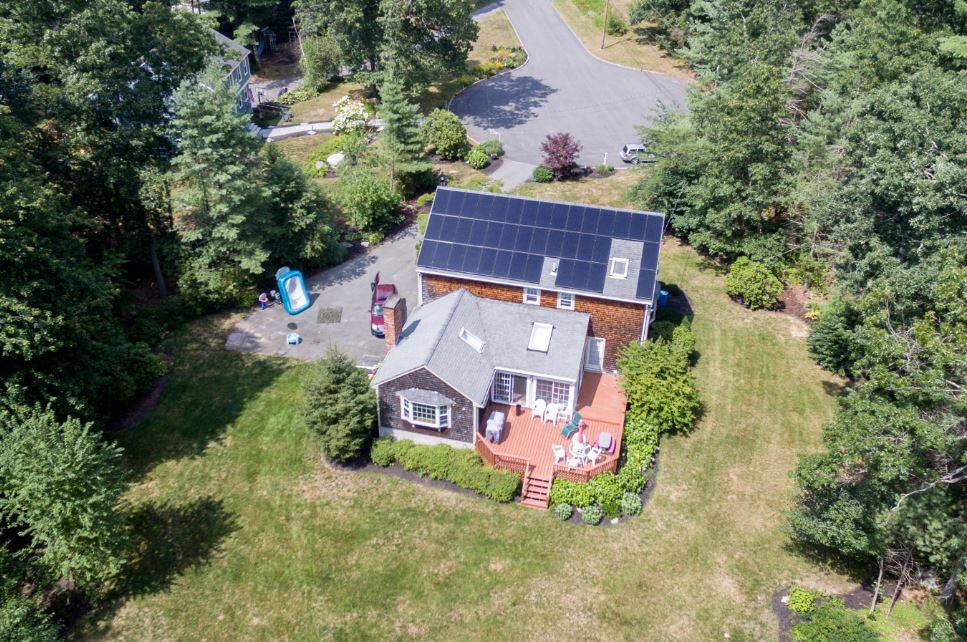
Ready to See the Math for Your Home?
Get a free, custom solar design and exact financial breakdown tailored to your specific utility rate and roof.