How Solar Panels Affect Your Homeowners Insurance in Massachusetts
By Dave Simmer
NABCEP-Trained Solar Professional, Scituate, MA
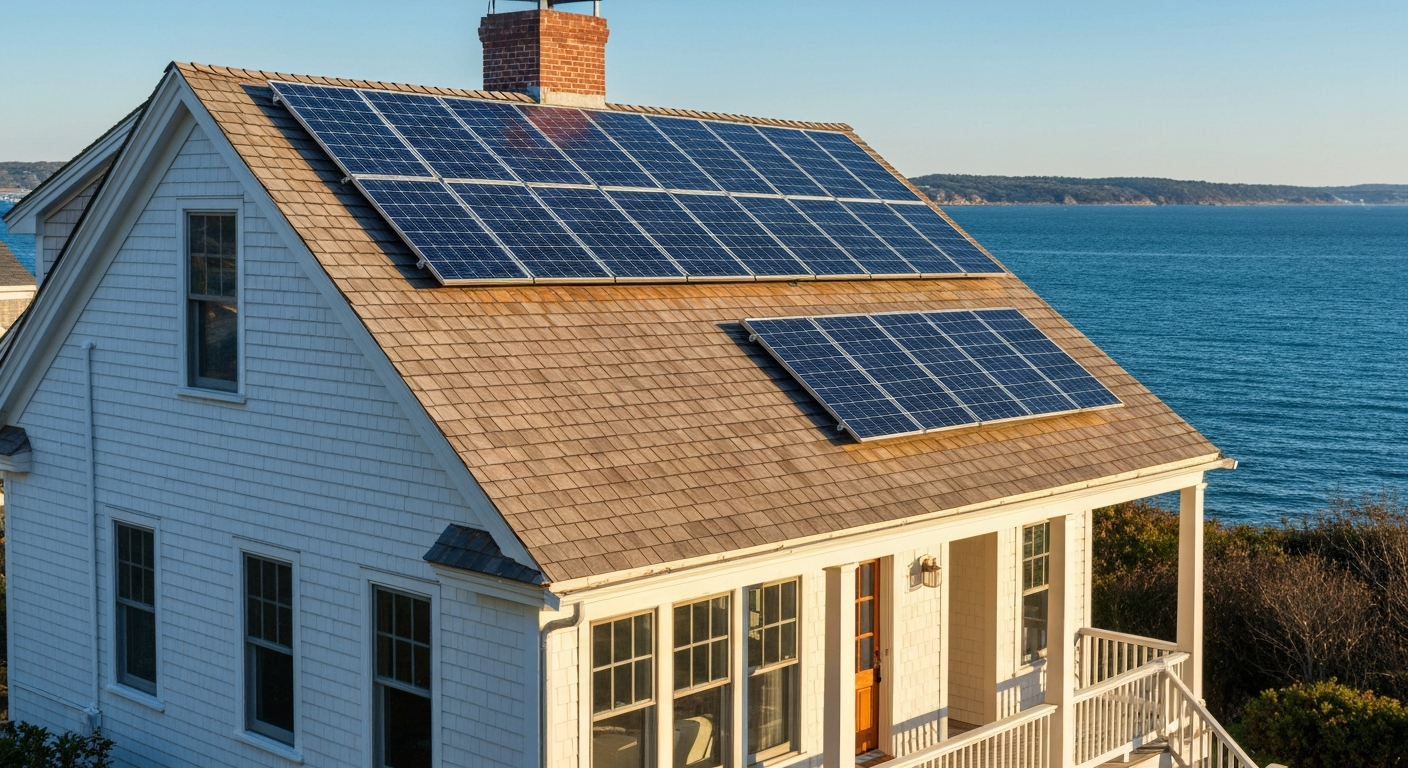
For most Massachusetts homeowners, rooftop solar is a small, simple insurance question—not a scary one. Owned roof-mounted panels are usually covered as part of your home under a standard homeowners policy, the same way an attached deck or a new roof would be. There's often a modest bump in coverage (and sometimes premium) because your home is now worth a bit more to rebuild, but it's typically minor. The one thing I always tell people: call your insurer and tell them, so the coverage is on the record before you ever need it. I'm not an insurance agent, but here's the plain-English version of how it works.
Owned panels are usually part of your dwelling coverage
When you own your system (cash or loan), roof-mounted panels are generally treated as a permanent part of the house, so they fall under your dwelling coverage—the same bucket that covers your roof and walls. That means storm, fire and most of the same perils your home is already insured against typically extend to the panels. Because the panels add replacement value, your insurer may raise your dwelling coverage limit to match, which can nudge the premium up a little.
Tell your insurer—it's the important step
The mistake to avoid is staying quiet. Notify your insurance company once your system is installed so your coverage limit reflects the added value and the panels are documented. It's a quick call, and it's what makes a future claim smooth. Ask them directly: are my panels covered under my dwelling limit, do I need to raise that limit, and is wind/storm damage included? Get the answer in writing.
Leased panels and PPAs work differently
If you lease your system or use a power purchase agreement, you don't own the equipment—the provider does—so the insurance responsibility usually sits with them, not you. It's still worth confirming with both your insurer and the provider who covers what, especially for roof damage during install or removal. This is one more reason I walk every homeowner through ownership vs. leasing before they sign anything.
Coastal South Shore considerations
Out here near the water in Scituate, Cohasset and Marshfield, wind and storm coverage is the part worth double-checking, since coastal policies vary and some carry separate wind/hurricane deductibles. A properly engineered, well-flashed system (the kind I design and oversee) is built to ride out a Nor'easter, but your policy terms are a separate question—confirm how your specific carrier treats wind damage to a roof-mounted array.
My honest take
For the large majority of homeowners I work with, adding solar barely moves the insurance needle—a small coverage adjustment and a phone call. Don't let insurance be the thing that stops you, but don't skip the call either. If you want, I'll point you to the documentation (system value, equipment list) your insurer will ask for.
Frequently asked questions
Does homeowners insurance cover solar panels in Massachusetts?
Usually, yes—owned roof-mounted panels are typically covered as part of your dwelling under a standard homeowners policy, including many of the same perils as your roof. Confirm the details and your coverage limit with your specific carrier, and notify them once the system is installed.
Will solar panels raise my homeowners insurance premium?
Often only modestly, if at all. Because your home is worth a bit more to rebuild, your insurer may raise your dwelling coverage limit, which can slightly increase the premium. The change is usually small—ask your carrier for the specifics on your policy.
Do I need to tell my insurance company I got solar?
Yes. Notify your insurer after installation so your coverage limit reflects the added value and the panels are documented. It's a quick call and it's what keeps a future claim straightforward. I'm not an insurance advisor, but I can provide the system details they'll ask for.
Who insures leased or PPA solar panels?
With a lease or power purchase agreement you don't own the equipment, so the provider typically carries the insurance on it. Confirm with both your homeowners insurer and the solar provider who covers what, especially for any roof work during installation or removal.
Want straight answers before you go solar? Get a free, no-pressure estimate and I'll walk you through the whole picture—including what your insurer will want to know.