Will My Solar Panels Survive a Nor'easter on the South Shore?

By Dave Simmer
NABCEP-Trained Solar Professional, Scituate, MA
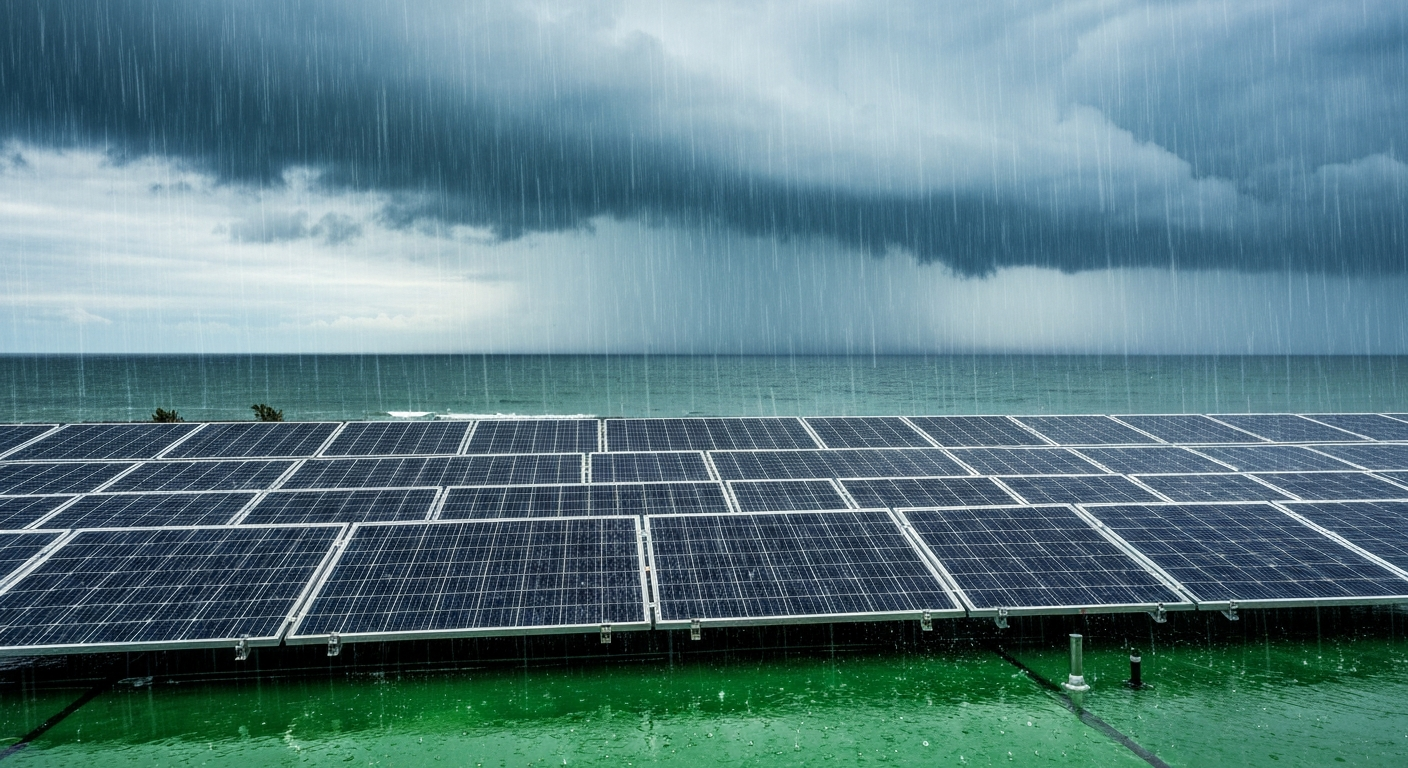
Short answer: a properly engineered solar system will ride out a Nor'easter just fine. The panels and racking I spec are rated for wind loads well beyond the gusts we typically see on the South Shore, and they're attached and flashed to handle our coastal weather. Most storm problems I've seen over the years don't come from the storm—they come from a cheap, rushed install that wasn't built for where it lives. Here's how a coastal-grade system is put together, and what actually matters near the water.
Wind ratings and racking: the part you don't see
The strength of a solar array is mostly in the mounting. I design around engineered racking from IronRidge, Unirac and—on metal roofs—S-5! clamps, and every system is designed to the wind zone for your specific address and roof. That means the right number of attachment points, lagged into solid framing, with the layout engineered for uplift. The permit and inspection process in Massachusetts exists partly to confirm exactly this. Modern panels and racking are commonly rated to handle wind speeds far above a normal Nor'easter; the failures happen when someone skips the engineering, not when the wind shows up.
Salt air and coastal corrosion
This is the South Shore detail a lot of out-of-town crews miss. Right along the water in Scituate, Cohasset, Marshfield and Hull, salt air is hard on cheap metal and flashing. I spec corrosion-resistant, anodized aluminum rails and quality stainless hardware, and the licensed crews I work with pay close attention to flashing and roof penetrations so they stay watertight, and I check this during my own site visits. Good materials near the coast aren't an upgrade—they're the baseline. It's one more reason I'd rather you work with a local installer who actually builds in this environment.
Hail, branches and flying debris
The panels I spec use tempered glass tested to take hail and impact, and in New England our bigger risk is usually wind-driven debris and tree limbs, not hail. Trimming back limbs that overhang the array is cheap insurance—it protects the panels and keeps shade off them the rest of the year. If trees are a factor on your lot, my guide on whether your roof qualifies for solar walks through how I evaluate it.
What actually fails—and how I avoid it
When I get called out to look at a storm-damaged array, it's almost always one of a few things: too few attachment points, lags that missed the rafters, builder-grade flashing that let water in, or panels clamped at the wrong spots. None of that is the storm's fault—it's an install that cut corners. I'd rather do it right once. That's the whole reason I tell people to be careful choosing between a national outfit and a local crew, which I break down in my independent vs. national company comparison.
The storm question people really mean: will I still have power?
Here's the part worth being honest about. Surviving the wind is one thing—keeping your lights on is another. For safety, a standard grid-tied solar system shuts off during a power outage, so panels alone won't run your house when the grid goes down in a Nor'easter. If staying powered through outages is your goal, you need a battery. A Tesla Powerwall 3 (13.5 kWh usable, 11.5 kW continuous) or an Enphase IQ Battery will island your home and keep the essentials running. I cover exactly how that works in my guide on keeping your power on during an outage.
Warranties and insurance, briefly
Quality equipment carries real backing—the REC Alpha panels I spec come with a 25-year product, power and labor warranty when installed by an REC Certified Pro — a credential the licensed crews I work with hold. Storm damage itself is generally a homeowners-insurance matter, and a roof-mounted solar array is usually treated as part of the home—but check your specific policy, because coverage varies by carrier, especially on the coast. I'm happy to point you to the documentation you'd need. You can also see the exact panels, racking and batteries I spec on my solar equipment and products page.
Built for this coast
I live and work on the South Shore. The systems I design are meant for our wind, our salt air and our Nor'easters—not a calm inland suburb. If you're in Scituate, Cohasset, Marshfield or anywhere along the coast and you're worried about storms, that's a good conversation to have before you buy, not after.
Frequently asked questions
What wind speed can solar panels withstand?
Modern panels on engineered racking are commonly rated to handle wind speeds well beyond a typical Nor'easter, and every system is designed to the wind zone for your specific roof. The real variable is the install—proper attachment points lagged into framing are what keep an array on the roof in a storm.
Does salt air near the coast damage solar panels?
It can damage cheap hardware, which is why I use corrosion-resistant anodized aluminum rails and stainless fasteners on coastal homes in Scituate, Cohasset, Marshfield and Hull. Quality panels are sealed and built for marine environments. Near the water, good materials and proper flashing are the baseline, not an upgrade.
Will my panels keep working after a storm power outage?
For safety, a standard grid-tied system shuts off when the grid goes down, so panels alone won't power your home during an outage. To keep power on through a Nor'easter you need a battery like a Tesla Powerwall 3 or Enphase IQ Battery, which islands your home and runs your essentials.
Are my solar panels covered if a Nor'easter damages them?
Storm damage is generally a homeowners-insurance matter, and a roof-mounted array is usually treated as part of the home—but coverage varies by carrier, especially on the coast, so check your specific policy. Separately, quality equipment like REC panels carries a 25-year product, power and labor warranty.
Want a system actually engineered for the coast? Get your free, no-pressure estimate and I'll give you real numbers—and an honest read on whether your roof is a good fit.