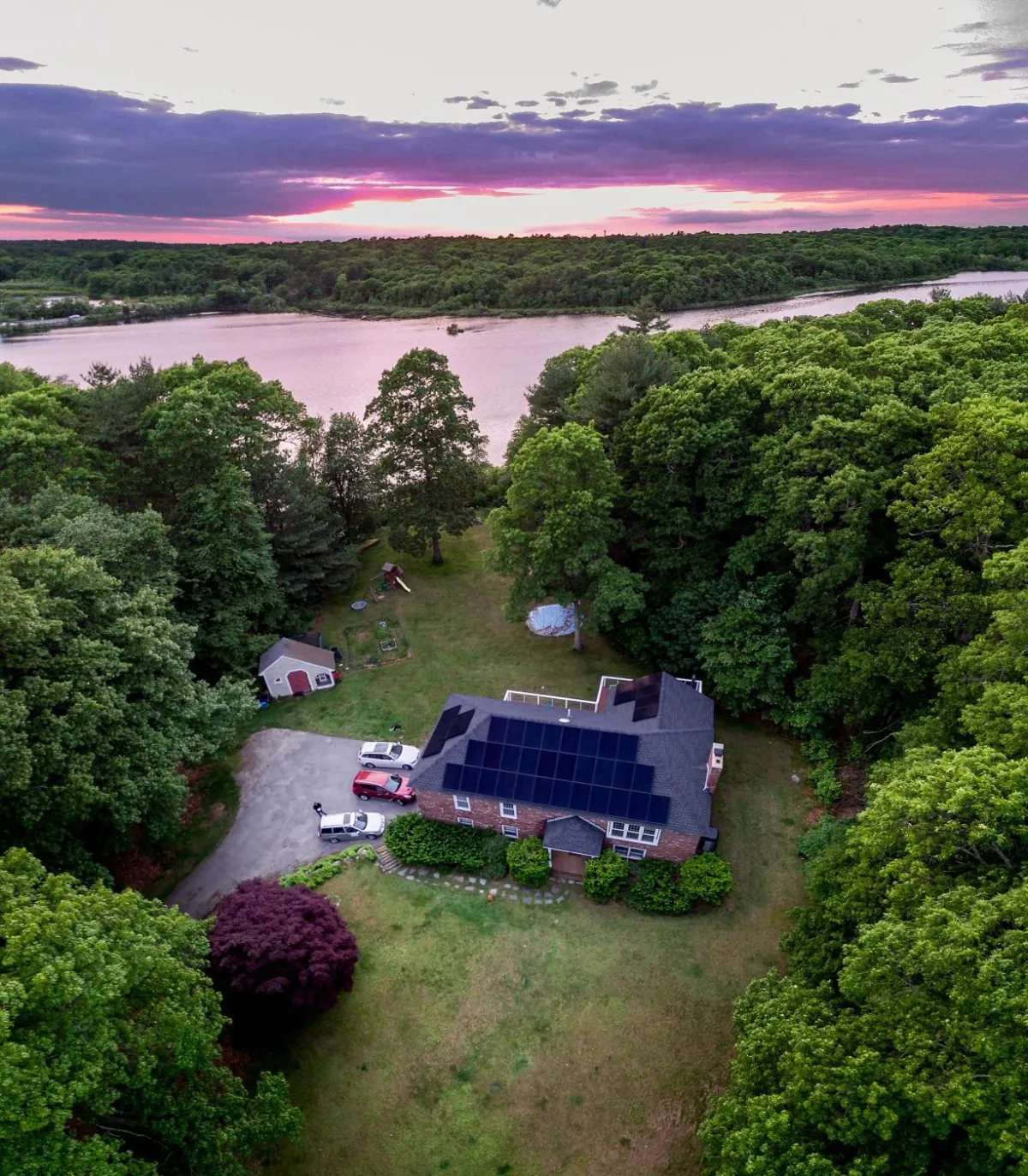
Do You Qualify for Solar in Massachusetts? What Every Homeowner Should Know Before Getting a Quote

By Dave Simmer
NABCEP-Trained Solar Professional — Scituate, MA
Most Massachusetts homes are actually good candidates for solar energy. But "most" isn't "all." There are several specific factors that affect whether your home will perform well and whether the financial math will actually work in your favor. I'm Dave Simmer, a NABCEP-trained solar installer based here in Scituate. I've installed 1,800+ homes across the South Shore since 2011, and I've also had to tell plenty of homeowners that solar just isn't right for their property. I want to walk you through exactly what I look at so you can do an honest self-assessment before you ever talk to an installer.
You Need to Own Your Home (Not Rent It)
This is the hardest rule: if you rent, you cannot install solar panels. You don't own the roof or the property, so the decision isn't yours to make. Standard single-family homeowners are the primary audience for residential solar. If you own a condo or live in a community with a Homeowner's Association, there are some additional considerations. You still need to own the roof space where the panels will go, which can be tricky in some condo setups. For HOAs, homeowners often worry they'll be blocked. The reality is that Massachusetts law actually protects your right to install solar. While an HOA might have some reasonable guidelines about aesthetics or placement, they generally cannot outright prohibit you from going solar. Owning the structure is the first and most basic hurdle. (See why independent solar beats national companies).
Your Roof — The Single Biggest Factor
Your roof decides more than anything else whether solar makes sense, so I gave it its own deep dive and I'll keep the summary here. The short version: a south-, east-, or west-facing roof with limited shading, sound shingles with roughly 10 or more years of life left, and enough clear area to fit a worthwhile system is usually in good shape. Where it gets more involved is heavy tree shading, a roof near the end of its life, or a small or chopped-up roof plane — those are the cases where the answer is "it depends," and I walk through exactly how I evaluate each one in the full guide.
For the complete rundown on orientation, shading, roof age, materials, and what actually disqualifies a roof, read Does My Roof Qualify for Solar?. Then come back here for the rest of the picture — because the roof is only one of the boxes you need to check.
Your Electric Bill — Is There Enough Usage to Offset?
Solar works by offsetting the electricity you currently buy from the grid. If you are barely using any electricity, there isn't much of a bill to offset. As a general rule, I look for an average monthly electric bill of at least $100 to $120 as a rough floor. Below that, the upfront cost of the system might take too long to pay for itself through savings (learn how to calculate your solar savings).
On the other hand, high-usage homes see the strongest financial returns. If you have electric vehicles, heat pumps, electric water heaters, central air conditioning, or just a large home, your bills are likely substantial. For these homes, solar offers massive savings because you are replacing expensive utility power with your own generated power. The size of the system we design is directly tied to your historical usage, which is why looking at your actual electric bill is always step one.
Your Electrical Panel
When solar is installed, the system gets tied into your home's main electrical panel. Most modern homes with a 200-amp service can accommodate a solar interconnection without any issues. However, if you have an older 100-amp panel, or a very old fuse box, you might require an electrical service upgrade before solar can be connected safely. (Read the complete installation guide).
If your panel is already full because you've recently added an EV charger, a heat pump, or a hot tub, that also affects available capacity. This isn't a disqualifier by any means — it is just a cost consideration. Upgrading a panel is a routine part of many solar projects. An electrical assessment is part of the process to ensure everything is safe and up to code.
Your Plans for the Home
How long you plan to stay in your home changes the financial timeline. If you are planning to sell and move in the next one to three years, solar may still add value to your home, but you won't be around long enough to see the full return on your investment through monthly utility savings. If you are planning major renovations or additions that will alter your roofline, it is usually best to wait until that work is completed before designing a solar array. Solar is most financially rewarding for homeowners who plan to stay in their homes for seven years or more, allowing the system to fully pay for itself and generate years of effectively free electricity.
What About Credit Score and Financing Eligibility?
If you are paying cash for your system, your credit score doesn't matter. But most homeowners choose to finance their solar installation. If you are financing, your credit score will affect your loan terms and interest rates. Most solar lenders work with a range of credit profiles, and there are many loan products available (see solar financing options in Massachusetts). This is a separate conversation from whether your home qualifies technically. A home can be a perfect solar candidate physically, even if the financing takes some additional work to structure.
The Self-Assessment Summary — How Does Your Home Stack Up?
If you own your home, have a roof in decent condition with at least five years of life left, have reasonable sun exposure on a south or east/west-facing roof, and your electric bill is regularly above that $100 to $120 a month mark — you are likely a strong candidate worth evaluating further. Even if your home fails one of these criteria, it isn't automatically out. It is about looking at the full picture and seeing if the math makes sense for your specific situation.
What Happens When You Reach Out to Me
When a homeowner contacts me, the first conversation is straightforward. I look at your roof via satellite imagery to check the orientation and available space. I pull local production data for your specific address. I look at a recent electric bill if you have one handy. Based on that, I give you an honest first read. There is no pressure and no sales pitch. If it looks like a good fit, I'll run the real numbers and show you what a system would look like. If it doesn't make sense for your home, I'll tell you that plainly (or see what the process looks like).
Already checked most of these boxes? Here's what a system would actually cost: How Much Do Solar Panels Cost in Massachusetts?