Tesla Solar Roof vs. Traditional Solar Panels
By Dave Simmer
NABCEP-Trained Solar Professional — Scituate, MA
It's one of the most common questions I get when a homeowner needs a new roof and wants to go solar at the same time: "What about the Tesla Solar Roof?"
There's no denying the appeal. The idea of replacing your old asphalt shingles with sleek, futuristic glass tiles that generate electricity sounds incredible. It looks fantastic, and the marketing is top-notch. But when you look past the aesthetics and dig into the reality of New England weather, maintenance, and actual costs, the picture changes.
Here is an honest breakdown of the Tesla Solar Roof versus traditional solar panels, and why traditional panels almost always make more sense for Massachusetts homeowners.
Quick update: Tesla discontinued the Solar Roof entirely on August 24, 2026. Read the full story and what it means for South Shore homeowners →
What is the Tesla Solar Roof?
Unlike traditional solar panels that are mounted on top of your existing roof, the Tesla Solar Roof is the roof. It consists of tempered glass tiles, some of which contain embedded solar cells (active tiles) and some of which don't (inactive tiles). They are designed to blend together seamlessly so the entire roof looks uniform.
It's a premium, high-end building material designed for homeowners who want solar power but absolutely do not want the look of traditional solar panels on their home.
The Case for Traditional Solar Panels in New England
1. Cost and Return on Investment (ROI)
This is the biggest hurdle for the Tesla Solar Roof. It is exceptionally expensive. Even if you need a brand new roof anyway, the math heavily favors traditional panels.
In Massachusetts, paying for a high-quality architectural asphalt roof replacement plus a premium traditional solar system (like REC panels with Enphase microinverters) is typically half to one-third the cost of a Tesla Solar Roof.
A Tesla Solar Roof routinely quotes at $80,000 to $150,000+ for a standard South Shore home. A new asphalt roof plus traditional solar is usually $40,000 to $60,000 combined.
Because the upfront cost of the Tesla roof is so high, the payback period stretches out for decades, effectively wiping out the financial benefits of going solar.
2. Snow Shedding and Winter Weather
We live in New England. Snow and ice are a reality, and how your roof handles them matters.
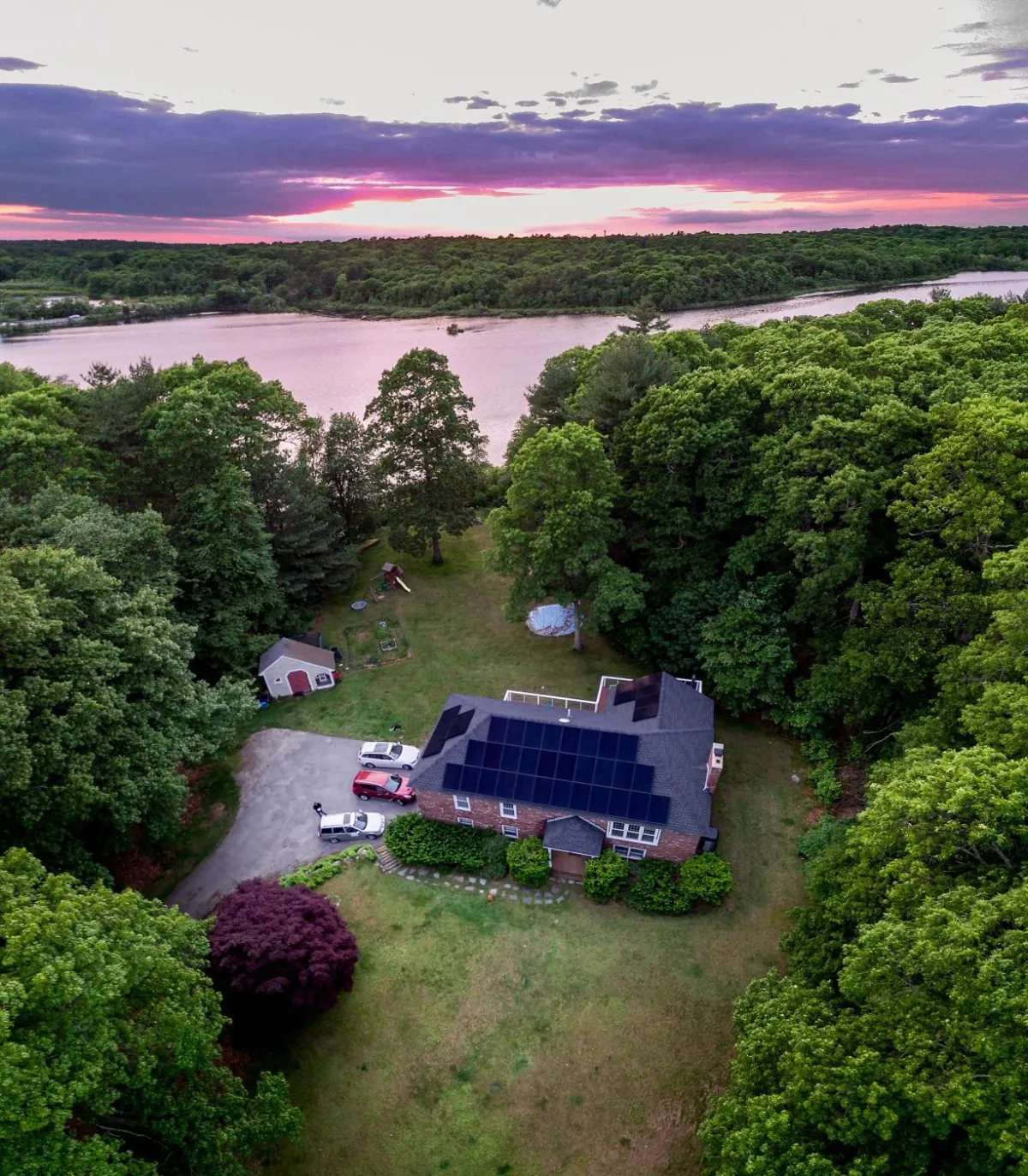
Traditional solar panels are large, smooth sheets of glass mounted a few inches above your roof. When the sun comes out after a storm, the dark panels heat up quickly, and the snow slides right off in large sheets. They clear themselves very efficiently.
The Tesla Solar Roof is made of thousands of individual smaller tiles with seams and slight textures. While glass is slippery, the seams and the flush nature of the roof can sometimes cause snow to hold longer or melt unevenly. More importantly, traditional panels sit above the roof deck, creating an air gap that helps prevent ice damming. A fully integrated glass roof behaves differently under heavy New England snow loads.
3. Efficiency and Production
Traditional solar panels are incredibly efficient. Premium panels today sit at 22-23% efficiency. Because they are mounted on racks, they benefit from airflow underneath, which keeps them cooler (solar panels lose efficiency as they get hotter).
Tesla Solar Roof tiles are flush-mounted with virtually no airflow underneath, meaning they run hotter and less efficiently in the summer. Additionally, the active solar cells in a Tesla roof are generally less efficient per square foot than a premium traditional panel. If you have limited roof space, traditional panels will generate significantly more power.
4. Maintenance and Repairs
If a traditional solar panel fails or gets damaged by a falling branch, a local solar crew can come out, unbolt the single panel, and swap it for a new one in about an hour. It's a simple, standardized process.
If a Tesla Solar Roof tile fails, or worse, if the roof develops a leak, you cannot call a standard local roofer. You must rely on specialized Tesla-certified crews to diagnose and repair the issue. Given Tesla's historical challenges with customer service and long wait times for specialized parts and labor, a simple repair can turn into a months-long headache.
When does a Tesla Solar Roof make sense?
I don't hate the Tesla Solar Roof. It's a cool product, but it's a niche product. It makes sense if:
- You are building a high-end new construction home and rolling the cost into the mortgage.
- You live in a strict historical district or HOA that outright bans traditional solar panels.
- You have an unlimited budget, aesthetics are your absolute number one priority, and you don't care about the financial ROI.
The Bottom Line
For 95% of Massachusetts homeowners, traditional solar panels are the clear winner. They are vastly more cost-effective, highly efficient, easy to maintain, and proven to handle New England winters.
If your roof is old, the smartest financial move is to hire a great local roofer to install a new architectural asphalt roof, and then have a great local solar company install premium, low-profile black solar panels on top. You'll save tens of thousands of dollars, get better power production, and still have a system that looks sleek and modern.
Curious about traditional panel costs?
Read: How Much Do Solar Panels Cost in Massachusetts?