Solar and Heat Pumps in Massachusetts: Do They Work Together?
By Dave Simmer
NABCEP-Trained Solar Professional, Scituate, MA
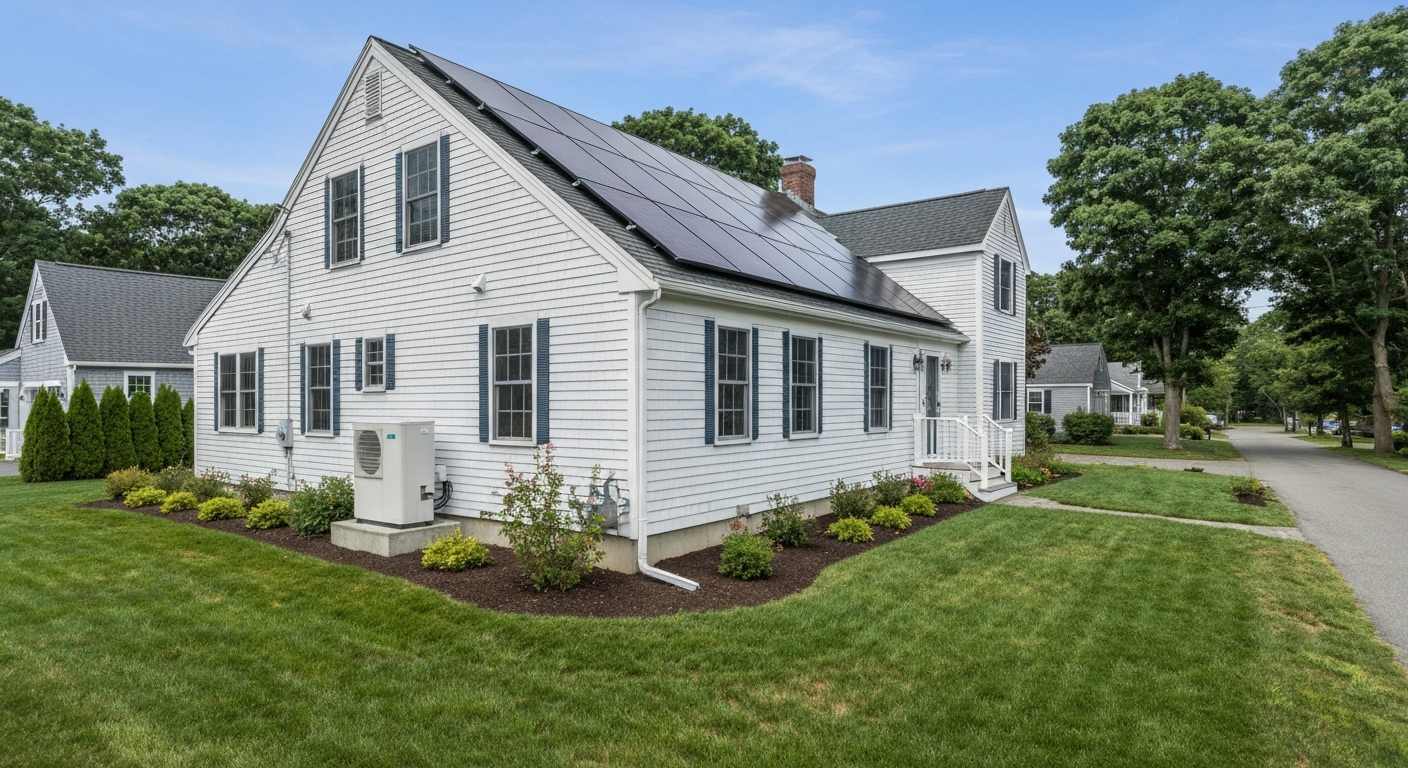
They're a natural pair. A heat pump runs your heating and cooling on electricity instead of oil, propane or gas—and solar lets you make a big chunk of that electricity yourself. In Massachusetts the combination is especially strong because you've got generous Mass Save heat-pump rebates, special heat-pump electric rates, and full-retail net metering all stacking together. The short version: a heat pump turns your heating bill into an electric load, and solar is the cheapest way to feed it.
Why the two belong together
On their own, each does one job: solar lowers your electric bill, a heat pump replaces fossil-fuel heating with efficient electric heating and cooling. Put them together and you're attacking two of the biggest energy costs in a New England home at once. Instead of buying oil every winter and electricity all year, you're generating power on your roof and using it to run the whole house—including heat. For a lot of South Shore homeowners that's the path to the lowest all-in energy cost.
It changes how I size your solar
This is the part people miss. Adding a heat pump raises your electricity use—often substantially in the heating months—so the array has to be sized for that bigger load, not your old oil-era usage. When I design a system for a home that has (or is planning) a heat pump, I build the heating load into the math from the start using your square footage, insulation and the equipment specs. My guide on what size solar system you need explains how I right-size it so you cover the house and the heat without overbuilding.
How net metering carries you through winter
Here's the catch with New England: your heat pump works hardest in winter, exactly when solar produces least. That sounds like a mismatch, but net metering is what makes it work. Your panels overproduce spring through fall and bank full-retail credits; you draw those credits down in winter when the heat pump is running and the panels are quiet. The goal is an annual balance, not a month-by-month one.
The Massachusetts incentive stack
This is where Massachusetts really pulls ahead. Mass Save—the utilities' energy-efficiency program—offers some of the most generous heat-pump rebates in the country, plus special discounted electric rates for homes heating with heat pumps. On the solar side you've got full-retail net metering and the SMART program, and if you add a battery, ConnectedSolutions can pay you for it. The exact rebate amounts and rate plans change, so I won't quote a number that might be stale—I'll pull the current Mass Save figures for your situation when we talk. I'm not your tax or rate advisor, but I'll point you to the right programs and paperwork.
Adding a battery (optional, but worth a look)
A heat pump keeps your home comfortable—until the grid goes down in a storm. If resilience matters to you, a battery like a Tesla Powerwall 3 or Enphase IQ Battery can keep essentials (and, with enough capacity, some heating) running during an outage, and earn money through ConnectedSolutions the rest of the year. I'll tell you honestly whether it pencils out for your home before you commit.
My honest take for South Shore homes
If you're heating with oil or propane in Scituate, Hingham, Duxbury or anywhere on the coast, pairing a heat pump with a properly sized solar array is one of the highest-impact moves you can make—you cut a fuel bill and an electric bill at the same time. If your roof or situation isn't a fit, I'll say so. But when it works, it's hard to beat.
Frequently asked questions
Can solar panels power a heat pump in Massachusetts?
Yes. A heat pump runs on electricity, and a properly sized solar array can generate enough over the year to cover it. Because the heat pump works hardest in winter when solar produces least, net metering banks your summer surplus and spends it down in winter to balance the year.
Do I need more solar panels if I add a heat pump?
Usually yes—a heat pump adds a significant electric load, especially in winter, so the array has to be sized for that, not your old fossil-fuel-era usage. I build the heating load into the design from the start so the system covers both your home and your heat.
What incentives are there for solar and heat pumps in Massachusetts?
Massachusetts has one of the strongest stacks in the country: Mass Save heat-pump rebates and special heat-pump electric rates, plus full-retail net metering, the SMART program, and ConnectedSolutions if you add a battery. Exact amounts change, so I pull current figures for your specific situation.
Will a heat pump and solar really lower my heating bill?
For most homes heating with oil or propane, yes—you replace fuel deliveries with efficient electric heating and generate much of that electricity on your roof. The savings depend on your home, your current fuel, and how the system is sized, which is exactly what I model before you decide.
Curious what solar plus a heat pump would do for your home? Get a free, no-pressure estimate and I'll model the heating load, the array, and the current incentives with real numbers.