No Roof for Solar? Community Solar and Other Options in Massachusetts
By Dave Simmer
NABCEP-Trained Solar Professional, Scituate, MA
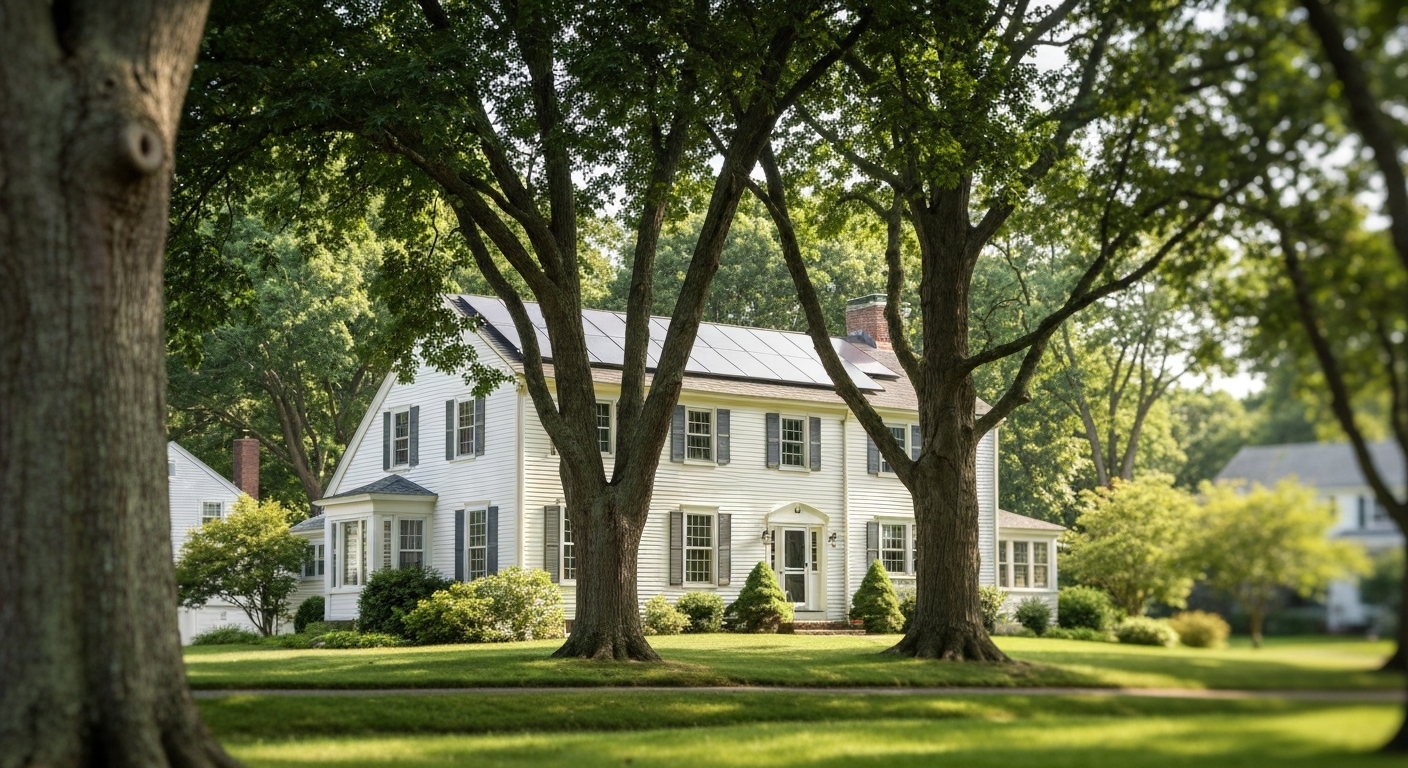
Yes—you can still benefit from solar in Massachusetts even if rooftop panels aren't a fit. If your roof is heavily shaded, faces the wrong way, or you rent and can't install anything, community solar lets you subscribe to a share of a larger off-site solar farm and get credits on your electric bill—no panels on your house. It usually means modest savings with no equipment to own or maintain. I design rooftop systems for a living, so I'll always tell you straight whether your roof works first—and if it doesn't, here are your real options.
First: is your roof really out?
Before writing off rooftop solar, it's worth a proper look. Sometimes "too shaded" is really one or two trees that can be trimmed, or a section of roof that gets more sun than you'd think. Microinverters (Enphase IQ8) also let the good panels produce even when a few are shaded, so partial shade doesn't always kill a project. My guide on solar with shade from trees covers what actually works. If you've got open land, a ground-mount array is another way around a bad roof. I'll give you an honest read before pointing you elsewhere.
What community solar actually is
If the roof truly doesn't work, community solar is the most common alternative in Massachusetts. Instead of panels on your home, you subscribe to a portion of a solar farm built somewhere else in the state. The power it produces earns credits that show up on your utility bill, and you typically pay for those credits at a discount—so you save a little without owning or maintaining anything. It's part of the same state solar framework (tied to the SMART program) that supports rooftop solar.
Who community solar is best for
It's a good fit if you rent, live in a condo, have a heavily shaded or north-facing roof, or just don't want equipment on your house. There's usually no install, no upfront cost, and you can cancel within the terms of your subscription. The flip side: the savings are modest compared with owning a well-sited rooftop system, and you don't get backup power or build home value the way owned panels do. It's a convenience-and-access play, not a wealth-building one.
Renters have options too
If you rent, you generally can't install panels, but community solar doesn't require it—so it's often the simplest way for renters to get a piece of solar savings. If you own the building, it's worth weighing rooftop solar as a long-term investment instead. Either way, I'm happy to point you in the right direction.
My honest take
If your roof works, owning a rooftop system in Massachusetts is hard to beat—net metering, the value bump, the long-term savings. But if it genuinely doesn't, community solar is a legitimate way to still come out ahead, and renters shouldn't feel left out. I'd rather give you a straight answer and send you to the right option than pretend every roof is a candidate.
Frequently asked questions
Can I get solar if my roof is too shaded?
Sometimes rooftop solar still works—trimming a tree or using microinverters can salvage a partly shaded roof, and a ground-mount is an option if you have land. If it truly doesn't work, community solar lets you subscribe to an off-site solar farm and earn credits on your bill instead.
What is community solar in Massachusetts?
Community solar lets you subscribe to a share of a larger off-site solar farm rather than installing panels at home. The energy it produces earns credits on your utility bill, which you typically buy at a discount—so you save modestly with no equipment to own or maintain. It's part of the state's solar framework.
Can renters use solar in Massachusetts?
Yes—through community solar. Renters usually can't install panels, but they can subscribe to a community solar project and get credits on their electric bill with no install and no upfront cost. It's often the simplest way for renters to share in solar savings.
Is community solar as good as rooftop solar?
Not quite. Community solar is convenient and accessible, but the savings are modest and you don't get backup power or added home value. If your roof is a good candidate, owning a rooftop system in Massachusetts typically delivers far more value over time.
Not sure if your roof is a candidate? Get a free, no-pressure estimate and I'll give you an honest read—rooftop, ground-mount, or pointing you toward community solar.