How Many Solar Panels Do You Need to Charge an EV in Massachusetts?
By Dave Simmer
NABCEP-Trained Solar Professional, Scituate, MA
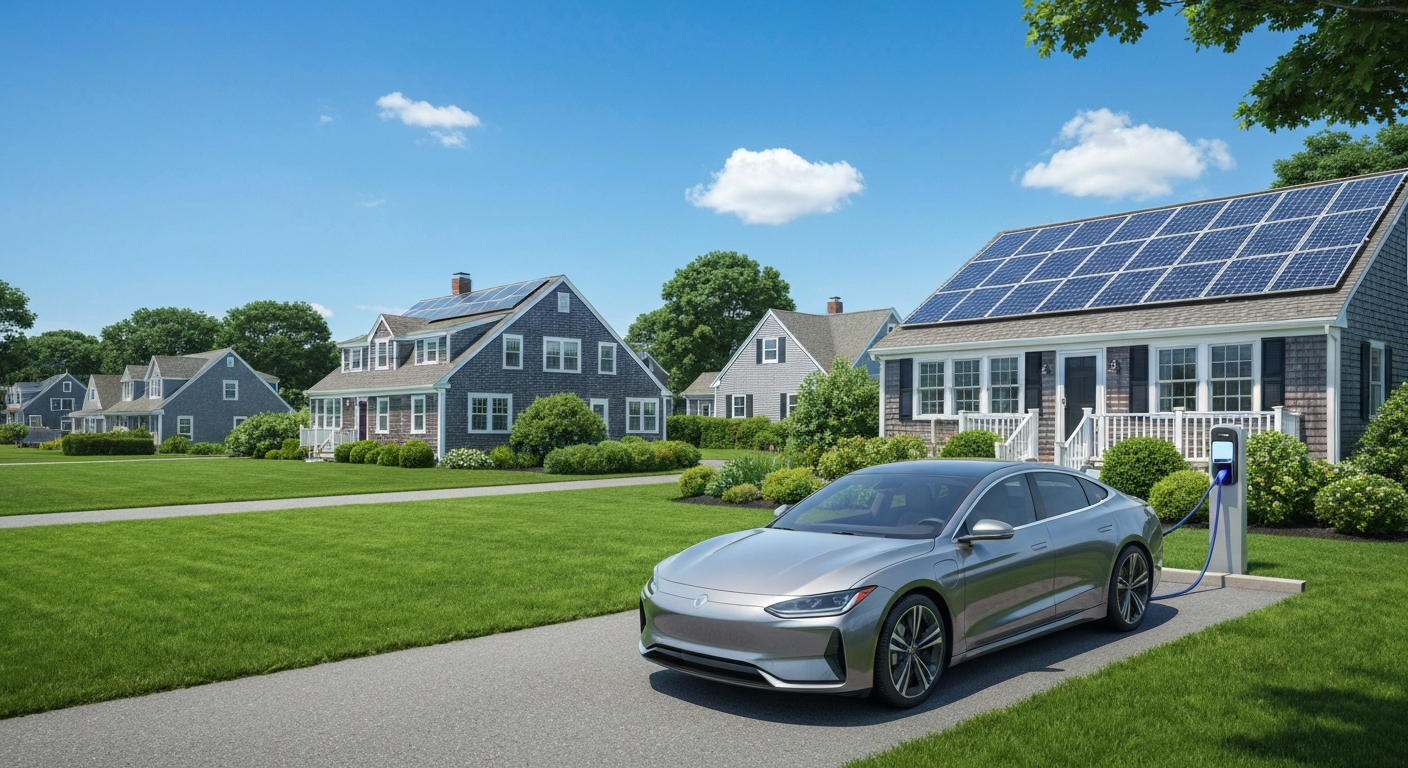
Yes—you can absolutely charge an electric vehicle with solar in Massachusetts, and for most homeowners it just means adding a handful of panels to the system you were already going to build. The rough rule of thumb: an average driver needs somewhere around 2.5–3.5 kW of extra solar—call it 6 to 9 panels—to cover typical EV charging. The exact number depends on how far you drive, but the nice part is you don't need a separate setup. Your car charges from the same rooftop array, and net metering smooths out the timing.
The quick math (so you can ballpark it yourself)
Start with your miles. A typical EV travels roughly 3 to 4 miles per kWh. If you drive about 12,000 miles a year, that's somewhere around 3,000–4,000 kWh of charging annually. In Massachusetts, a 1 kW of solar produces very roughly 1,150–1,300 kWh a year, so covering an EV usually takes about 2.5–3.5 kW of added panels. Drive a lot more than average, or own a big truck-style EV? You'll want more. Drive less? Fewer. When I design a system I use your actual mileage and the car's real efficiency instead of averages, so the number is built around you.
You don't charge "directly" from the panels—and that's fine
A common misconception is that your car only charges when the sun is out. In practice most people charge overnight, when the panels aren't producing. That's where net metering in Massachusetts does the heavy lifting: your panels overproduce during the day and bank full-retail credits, then you spend those credits down when you plug in at night. Over the year it nets out, so you're effectively driving on your own solar even though the kilowatt-hours don't line up to the minute.
Sizing it into the system from the start
If you already own an EV, I fold that load into the design from day one—your past 12 months of driving plus your home usage. If you're thinking about getting one in the next few years, tell me; it's much cheaper to size for it now than to come back and expand later. Either way, my guide on what size solar system you need walks through how I right-size an array so it covers the house and the car without overbuilding.
Already have solar? You can usually add panels
Bought an EV after you went solar and your bill crept back up? That's normal—you added a big new load. In most cases I can expand an existing array to cover it, as long as your roof and equipment have room. I cover exactly how that works in my guide on adding panels to an existing system.
The charger and the smart-charging angle
For home charging you'll want a Level 2 charger on a dedicated circuit—that's a straightforward electrical add and separate from the solar itself. If your utility offers time-of-use or EV rate plans, charging overnight can stack savings on top of solar, and many chargers let you schedule charging for off-peak hours. With Enphase microinverters you also get clean panel-level production data, so it's easy to see your array keeping up with the new load.
Is it worth it on the South Shore?
For most Scituate, Hingham and Marshfield homeowners, yes—adding a few panels to cover an EV is one of the better-value pieces of a solar project, because you're replacing gasoline with electricity you're generating yourself. If solar doesn't make sense for your roof, I'll tell you that. But if it does, sizing in the car is usually a small, smart addition.
Frequently asked questions
How many solar panels does it take to charge an electric car?
For an average driver, roughly 2.5–3.5 kW of solar—about 6 to 9 panels—covers typical EV charging. It scales with your mileage and the car's efficiency: a long commute or a large truck-style EV needs more, a short commute needs fewer. I size it from your actual driving, not averages.
Can I charge my EV at night with solar panels?
Yes. You won't be pulling power straight from the panels at night, but in Massachusetts net metering banks the full-retail credits your array earns during the day and applies them to your overnight charging. Over the year it balances out, so you're effectively driving on your own solar.
Do I need a bigger solar system if I buy an EV later?
Ideally, yes—it's cheaper to size for the car upfront than to expand later. If you already have solar and add an EV afterward, I can usually add panels to an existing array as long as your roof and equipment have room.
Will charging my EV with solar lower my electric bill?
It replaces gasoline and grid electricity with power you generate, so yes—properly sized, the added panels offset your charging instead of it showing up on your utility bill. The exact savings depend on your mileage, your rate, and how the system is sized to your usage.
Thinking about an EV—or already plugged in? Estimate your savings or get a free, no-pressure estimate and I'll size an array around your home and your driving.