Solar Financing Options for Massachusetts Homeowners
One of the biggest misconceptions I hear is that you have to pay for solar upfront. In reality, a lot of homeowners choose to finance it.
In many cases, there is little to no upfront cost, and the monthly payment can end up similar to or even lower than what you are currently paying for electricity.
Another thing people like is that the payment is fixed, while utility rates tend to keep going up.
And instead of just paying the electric company every month, you are working toward owning your system over time.
I will walk you through both cash and financing options so you can see clearly what actually makes sense for your situation.
FAQs
Your Solar Financing Questions Answered—Expert Insights for a Brighter Future
How long does installation take?
Most installs I handle are done in about 1 to 2 days, depending on the size of the system and the roof layout. The longer part of the process is usually permitting, approvals, and utility coordination, which can take a few weeks. I will walk you through the full timeline upfront so you know exactly what to expect.
Is solar worth it in Massachusetts?
In Massachusetts, solar can make a lot of sense because electric rates are relatively high and the incentives are strong. Most homeowners I work with see solid long term savings, especially if their electric bill is on the higher side. That said, it depends on your home, your roof, and your usage. I will run the numbers with you so you can see exactly how it would work in your case.
How much can I save?
It varies from home to home, but most homeowners I work with end up saving a significant amount over time. In many cases, the monthly payment is lower than their current electric bill, and over the life of the system the savings can add up to tens of thousands of dollars. The best way to know is to look at your actual usage and run real numbers for your home.
Will solar increase the value of my home?
In many cases, yes. Homes with solar are often more attractive to buyers because of the lower ongoing energy costs. That said, it depends on how the system is set up and owned. Systems that are owned or financed typically add more value than leased systems. I can walk you through how that works so you understand the difference.
Do I need to pay upfront for solar?
No. While some homeowners choose to pay cash, many go with financing. In a lot of cases, there is little to no upfront cost, and the monthly payment can be similar to or lower than what you are currently paying for electricity. I will show you both options so you can decide what makes the most sense.
What electric bill makes solar worth it?
In most cases, solar starts to make more sense when your electric bill is around $150 or more per month. If it is lower than that, the savings are usually not as strong. There are exceptions, but that is a good general rule. I can take a quick look at your usage and give you a straight answer.
What roofs do not work well for solar?
Some roofs are better than others. Heavy shade from trees, limited usable roof space, or roofs facing mostly north can make solar less effective. Older roofs that need to be replaced soon are also something to consider before installing. That said, every home is different, so it is worth taking a look before ruling it out.
What incentives are available?
Massachusetts offers a $1000 state tax credit, SMART program payments, and full net metering.
Do I need a battery?
Not necessarily. Most homeowners in Massachusetts do not need a battery for solar to make sense financially. Batteries are more about backup power and energy flexibility. For some people, they are worth it. For others, not as much. I will help you decide based on your goals and situation.
How do I know if my home is a good fit for solar?
The main things I look at are your roof orientation, shading, available space, and your electric usage. If those line up well, solar usually works great. If not, I will tell you that too. The easiest way is for me to take a quick look and walk you through it.
What happens if I move after installing solar?
If you sell your home, the solar system typically transfers with the property. In many cases, it can make the home more attractive to buyers because of the lower energy costs. If the system is financed, the loan is usually transferred or paid off at closing. I can explain how that works so there are no surprises.
How much does solar cost in Massachusetts?
Most residential systems fall somewhere in the range of about $25,000 to $40,000 before incentives, depending on the size and setup. After tax credits and state incentives, the net cost is quite a bit lower. The exact number depends on your home and energy usage, which is why I like to run real numbers instead of guessing.
Will solar work with shade or trees?
Shade definitely impacts production, but it does not automatically rule solar out. In many cases, we can design around it or adjust the system to still make it work. The key is understanding how much shade there is and when it occurs during the day. I can take a look and give you a clear answer.
Should I replace my roof before going solar?
If your roof is older and may need to be replaced in the next 5 to 10 years, it is usually a good idea to take care of that first. It is much easier and more cost effective than removing and reinstalling the system later. If your roof is in good shape, then you are likely fine to move forward.
Can I add a battery later?
Yes, in most cases you can add a battery later if you decide you want one. A lot of homeowners start with solar and then add storage down the road. I will design the system in a way that keeps that option open if it makes sense for you.
Thinking About Solar in Massachusetts? Let’s Take a Look Together
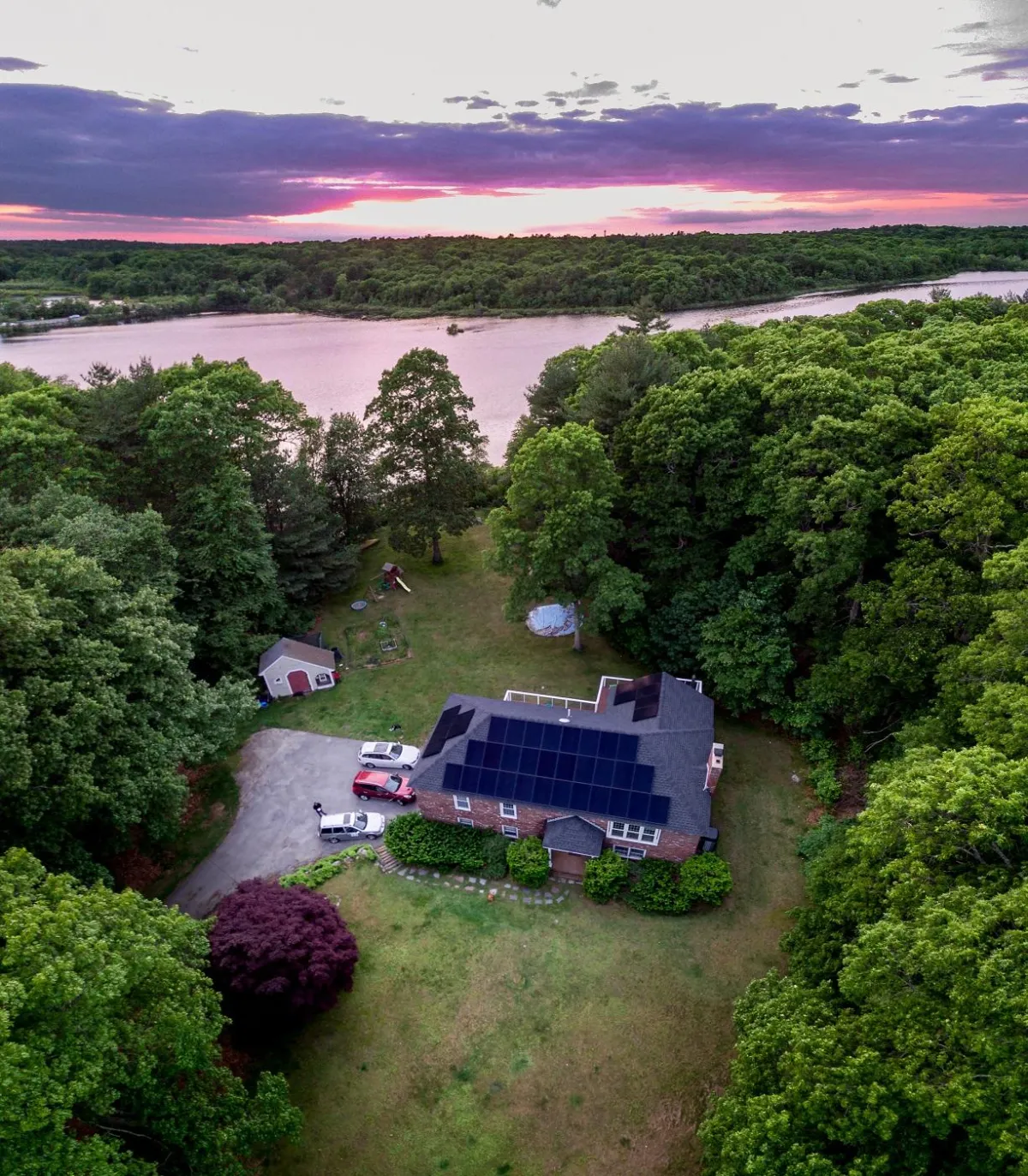
If you are considering solar, I am happy to take a look at your home and walk you through what it would actually look like.
We will go over your roof, your electric usage, and the current incentives so you can see real numbers and how it all comes together.
Most people I talk to just want to understand a few things:
- if their home is a good fit
- what it would cost
- and whether it is really worth it
That is exactly what I help you figure out.
In many cases, this can be done with little to no upfront cost, and monthly payments that are lower than your current electric bill.
Takes 5–10 minutes to get started
Areas I Serve
I am based on the South Shore and work with homeowners across Massachusetts and Rhode Island.
That includes Scituate, Plymouth, Quincy, Marshfield, Hingham, Norwell, Duxbury, Hanover, Pembroke, Cohasset and surrounding towns.
If you are in or near one of these areas, I am happy to take a look at your home and walk you through your options.
If you are not sure whether solar makes sense, the best place to start is with a clear breakdown of cost, incentives, and long term savings.
👉 Read: Is Solar Worth It in Massachusetts?
👉 Read: Massachusetts Solar Guide